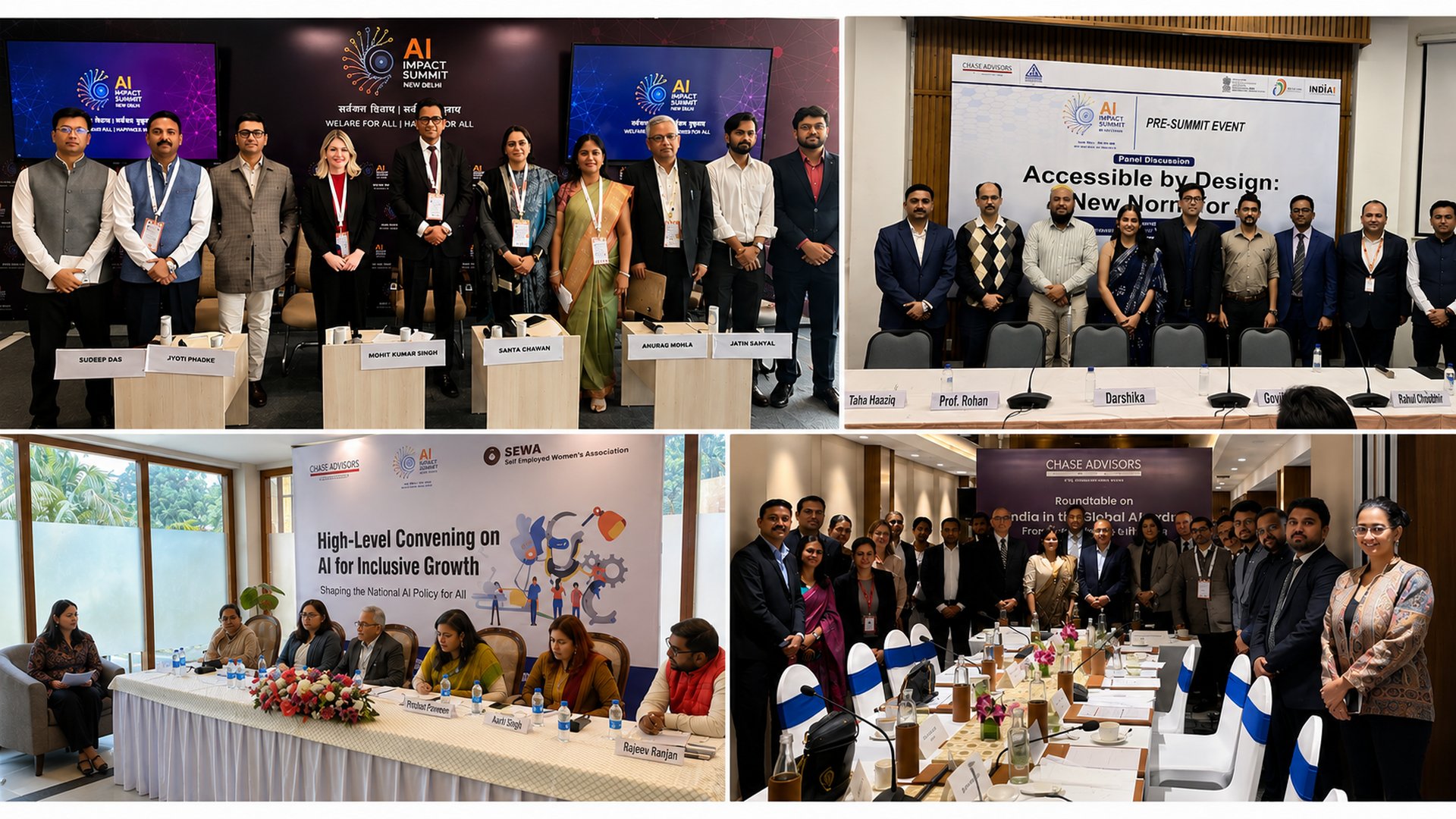
Chase Advisors at the India AI Impact Summit 2026
The India AI Impact Summit 2026, led by the Government of India, was a landmark global platform shaping the future of responsible and inclusive AI. It was the first-ever global AI summit hosted in the Global South. Notably, it was attended by over 20 Heads of Government and 59 Ministerial-level representatives, alongside government representatives from 100+ countries. The Summit also convened 100+ global AI leaders, CEOs and CXOs, and over 500 leading AI experts from across the world.
Chase Advisors was privileged to be a part of this global conversation and has played an active role in advancing key policy discussions throughout the Summit.
Event 1: Official Main-Summit Panel Discussion on ‘Consumers at the Core: Building AI with a Consumer-Centric Approach’
17 February 2026
As India’s AI ecosystem enters a defining phase, building systems that are as consumer centric as they are technologically advanced is shaping the next phase of responsible innovation. To advance this critical conversation, Chase secured government support to curate the only panel at the official main event program of the Impact Summit, focused on consumer interests, titled ‘Consumers at the Core: Building AI with a Consumer-Centric Approach’. It was organized in partnership with Consumer VOICE and Consumer Education and Research Centre (CERC).
The session brought together distinguished experts from government, consumer organizations, and industry to explore how consumers can be placed at the core of AI innovation. The session opened with welcome remarks from Kaushal Mahan, Senior Vice President, Chase Advisors and keynote address from Rohit Kumar Singh, Former Secretary to the Government of India and Former Member, National Consumer Disputes Redressal Commission (NCDRC). The session was honored by the presence of Sarita Chauhan, Joint Secretary, Department of Administrative Reforms and Public Grievances, Government of India. The esteemed speakers who participated in panel discussion included Erin Parsons, Digital Rights Policy Specialist, Consumers International; Anindita Mehta, CEO, CERC; Ashim Sanyal, CEO & Secretary, Consumer VOICE; and Sudeep Das, Head of Machine Learning and AI, New Business Verticals, DoorDash.
The discussion highlighted several priorities for advancing a truly consumer-centric AI ecosystem, including engaging consumers early and meaningfully in the design and development of AI systems, strengthening the role of civil society in identifying emerging harms and reinforcing accountability, promoting consistent global principles so consumer protections are not diluted across jurisdictions, embedding transparency, fairness, and privacy safeguards as core industry practices, and aligning innovation with public trust, inclusion, and accessible grievance redress mechanisms.
Event 2: Official Pre-Summit Panel Discussion on ‘Accessible by Design: A New Norm for AI’
18 November 2025
India’s AI ecosystem is undergoing a transformational shift, one where inclusion and accessibility are becoming as important as technological advancement. As India builds sovereign AI models, next-generation datasets, and public-sector AI applications, ensuring that accessibility is embedded by design has become a priority. To advance this critical conversation, Chase Advisors, in partnership with the National Association for the Blind (NAB Delhi), organized an official Pre-Summit Panel Discussion, titled ‘Accessible by Design: A New Norm for AI’.
The session brought together senior leaders from government, academia, industry, and civil society to explore how accessibility can be integrated across the entire AI lifecycle – from design, development, and deployment. The session opened with welcome remarks from Kaushal Mahan, Senior Vice President, Chase Advisors and thematic address from Prashant Ranjan Verma, General Secretary, National Association for the Blind (NAB), Delhi. The session was honored by presence of Shri Mohammed Y. Safirulla K, Director, India AI Mission, MeitY for Special Address & Ms. Manmeet Kaur Nanda, Additional Secretary, DEPwD, Ministry of Social Justice & Empowerment who delivered Keynote Address. The esteemed speakers who participated in panel discussion included Taha Haaziq, Secretary, Office of the State Commissioner for PwDs, Government of Goa; Prof. Rohan Paul, Associate Professor, IIT Delhi; Rahul Gambhir, Chief Manager & Digital Accessibility Specialist, Union Bank of India; Govind Chandrani, Practice Head, Engineering Services & AI, HCL Tech and Himanshu Gupta, Product Architect, Sarvam AI. The session was moderated by Darshika Gupta, Manager, Chase Advisors.
The discussion highlighted key themes including the need for disability-inclusive datasets, multilingual AI models, voice-first interfaces, whole-of-government accessibility approach, and inclusion of PwDs in co-design and evaluation processes. Insights from this session will contribute to the Inclusion for Social Empowerment Working Group and inform the deliberations leading up to the India AI Impact Summit 2026, to be held in New Delhi in February.
Event 3: Official Pre-Summit Panel Discussion on ‘AI for Inclusive Growth: Empowering the Informal and Care Economies’
3 February 2026
As India’s AI ecosystem scales rapidly across sectors, a critical question is emerging at the intersection of technology and livelihoods: how can AI be designed and deployed to meaningfully serve informal workers and the care economy, while ensuring usability, safeguards, and tangible outcomes on the ground. Anchoring this important dialogue, Chase Advisors, in partnership with the Self Employed Women’s Association (SEWA), convened the official Pre-Summit Panel Discussion, titled ‘AI for Inclusive Growth: Empowering the Informal and Care Economies’.
Opening remarks in the session were delivered by Manshi Shah, Program Manager, Future of work at SEWA. The esteemed speakers who participated in the panel discussion included Prakash Kumar, CEO, Wadhwani Centre for Government Digital Transformation; Shweta Jain Chaudhary, President Data, Analytics & AI, Haqdarshak; Mansi Chadorikar Kalra, Head Resource Mobilization & Partnerships, Digital Green Trust; Smita Jacob, Policy Advocacy Director, Women’s World Banking; Vivek Jaisree Mohandas, Environmental Policy and Resource Efficiency Advisor, GIZ India; and Mansi Shah, Program Manager – Future of Work at SEWA. The session was moderated by Suryaprabha Sadasivan, Senior Vice President, Chase Advisors.
The session reinforced the India AI Impact Summit’s vision of people-centric progress, positioning AI as a driver of inclusive growth and social good. It discussed that technological progress must translate into tangible improvements in livelihoods, income security, and agency for underserved communities.
Event 4: Expert Roundtable on “India in the Global AI Order: from Adoption to Influence"
18 February 2026
In the lead-up to discussions around the inaugural ceremony of the India AI Impact Summit 2026, Chase convened this roundtable, with support from Intel Corporation & Microsoft, bringing together global and national leaders from technology, policy, and strategic communities.
It was chaired by Shri Harsh V.Shringla, Member of Parliament, Rajya Sabha; former Foreign Secretary of India; Ambassador to the United States, Bangladesh, and Thailand; and former Chief G20Coordinator. The session was moderated by Kaushal Mahan, Senior Vice President, Chase Advisors.
Leading corporate leaders from organizations like Intel, Dell Technologies, Cognizant, Coursera, Autodesk, Salesforce, Ericsson, and Teleperformance joined the roundtable. It was also joined by top representatives from the organizations like The Rockefeller Foundation and high-growth startups like ElevenLabs, PrivaSapien, Doordash and CredoAI.
The discussion highlighted priorities for advancing India’s global AI ambition: building AI as foundational infrastructure; strengthening an energy-efficient, affordable AI stack; shaping balanced global standards; embedding AI across sectors with an AI-ready workforce; and enabling secure, unified data ecosystems. The roundtable emphasized that the next phase must move beyond adoption metrics, anchoring global influence in scale, deep infrastructure, responsible governance, and strategic co-creation.
Latest from us

August 30, 2026
Chase Advisors at World Circular Economy Forum 2026 (Two Accelerator Sessions for the Main Event)

May 21, 2026
Leadership Dialogue on ‘Building Trust in New-Age Commerce: Advancing Collaborative Growth Between Industry, Consumers and Government’
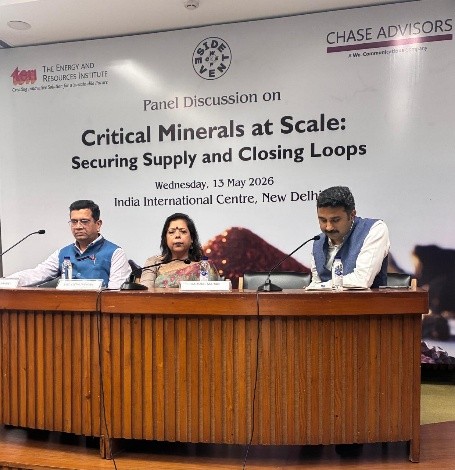
May 13, 2026
WCEF Official Side Event: Panel Discussion on ‘Critical Minerals at Scale: Securing Supply and Closing Loops’
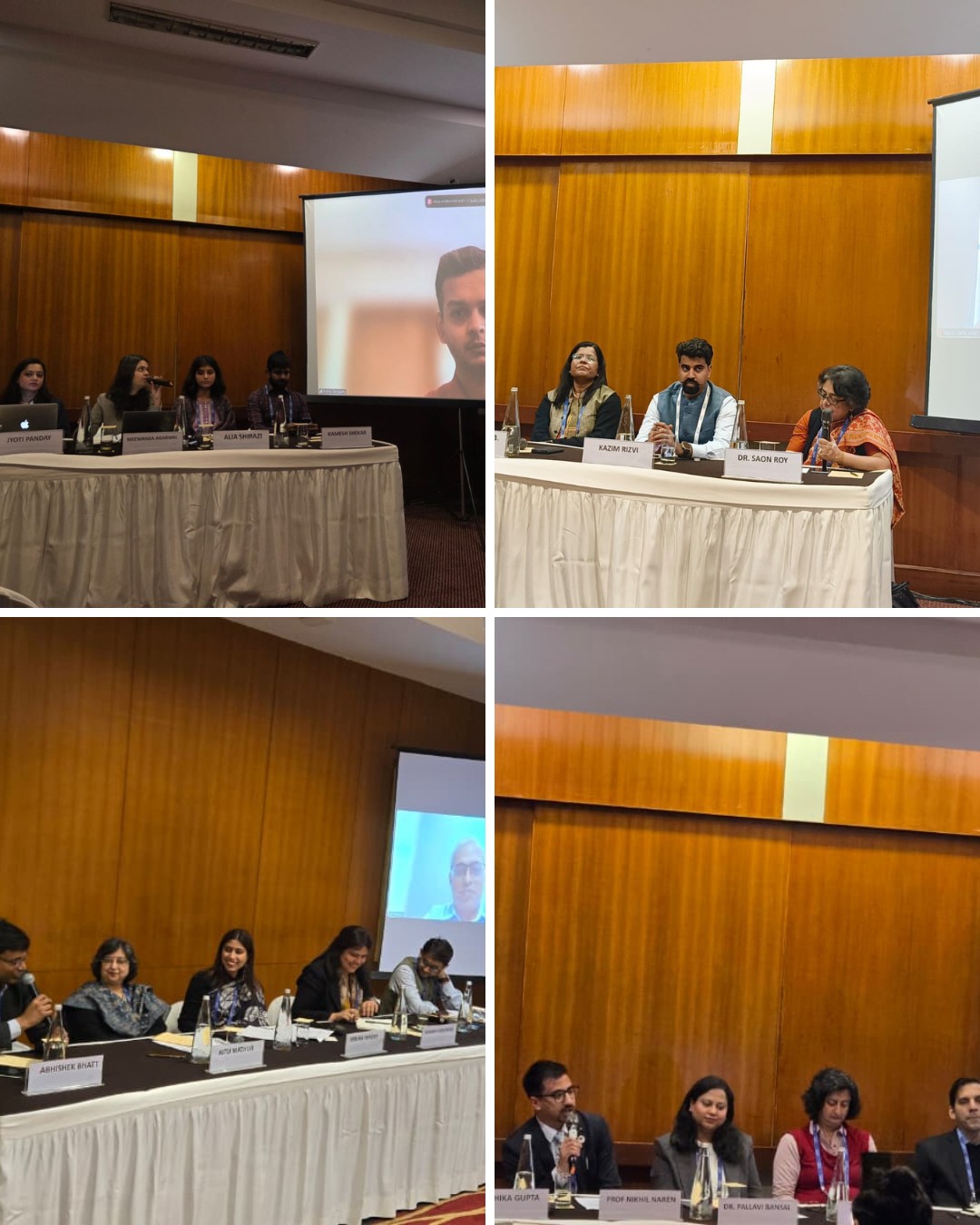
November 27, 2025
Panel Discussion in the India Internet Governance Forum (IIGF) 2025
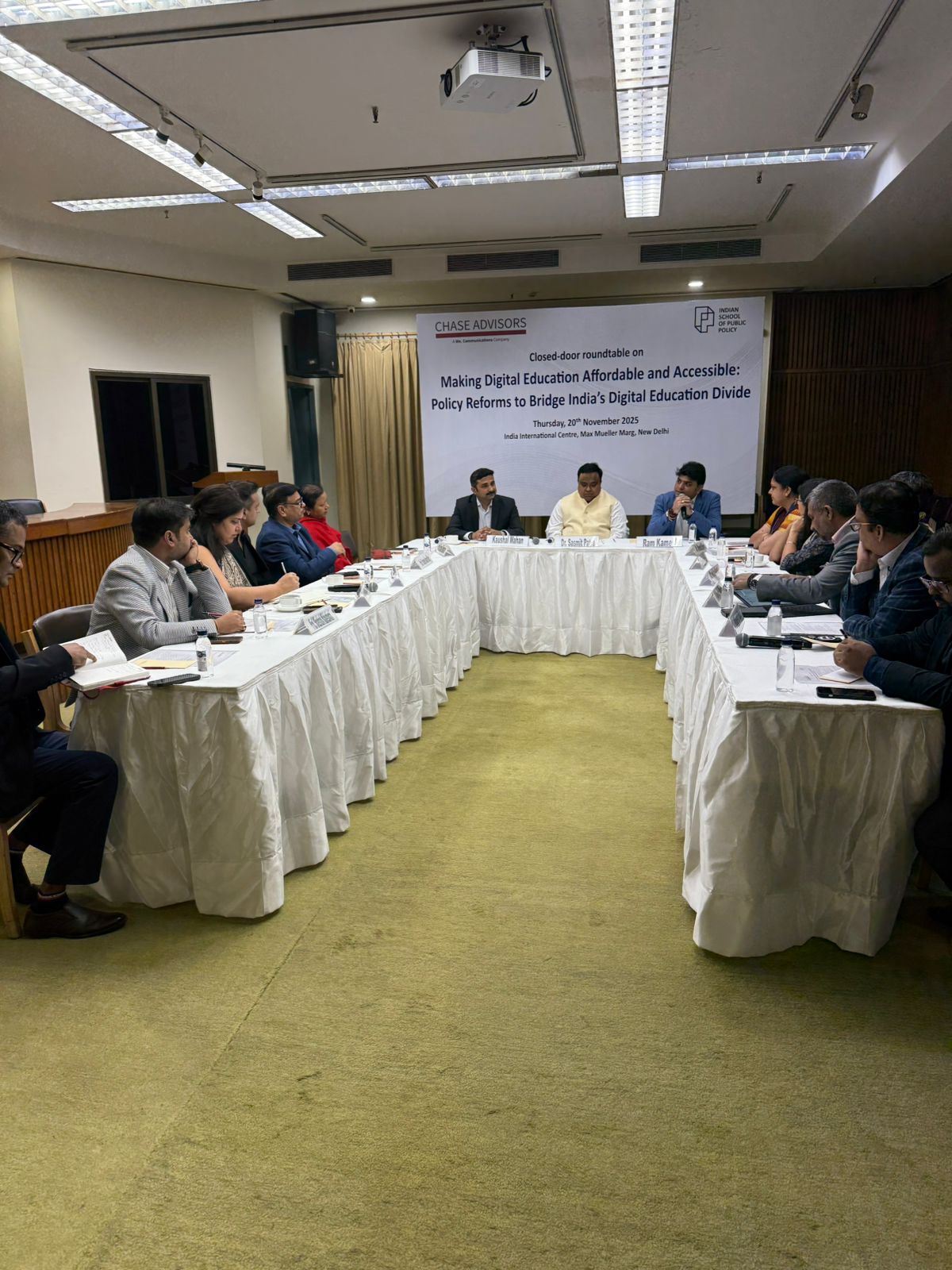
November 20, 2025
Roundtable discussion on Making Digital Education Affordable and Accessible: Policy Reforms to Bridge India’s Digital Education Divide
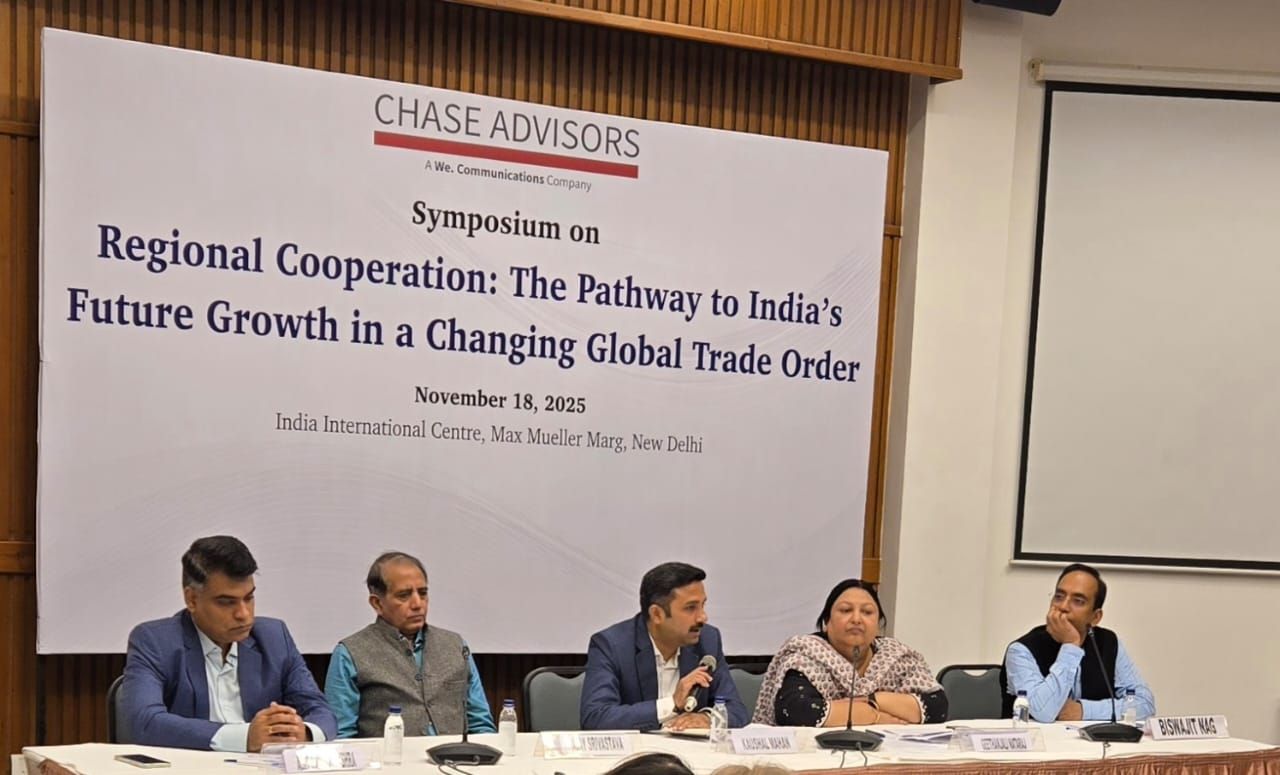
November 18, 2025
Symposium on Regional Cooperation: The Pathway to India’s Future Growth in a Changing Global Trade Order
July 30, 2025
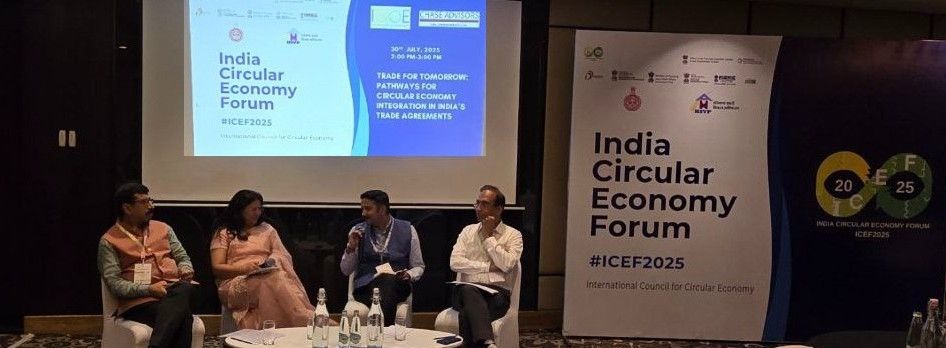
Panel Discussion on Trade for Tomorrow: Pathways for Circular Economy Integration in India’s Trade Agreements in India Circular Economy Forum 2025
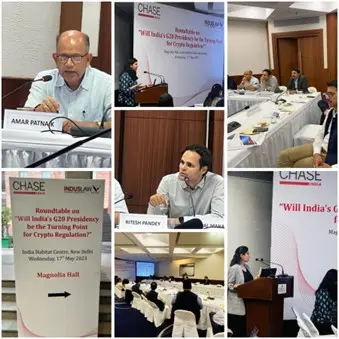
May 17, 2023
Chase India (now Chase Advisors) & IndusLaw Roundtable on Crypto Regulation
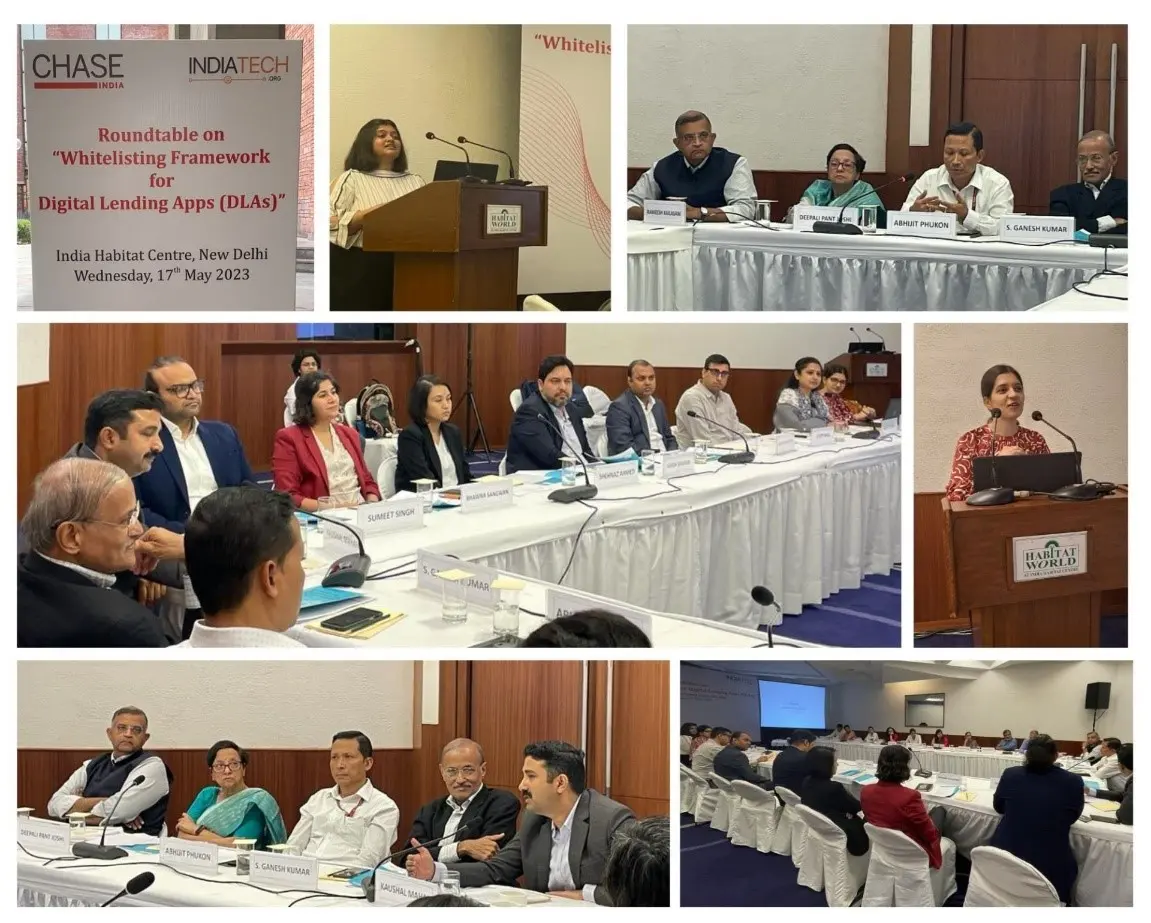
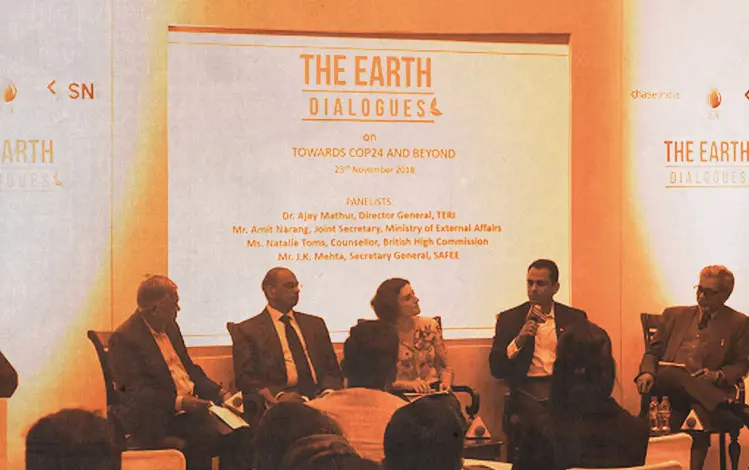




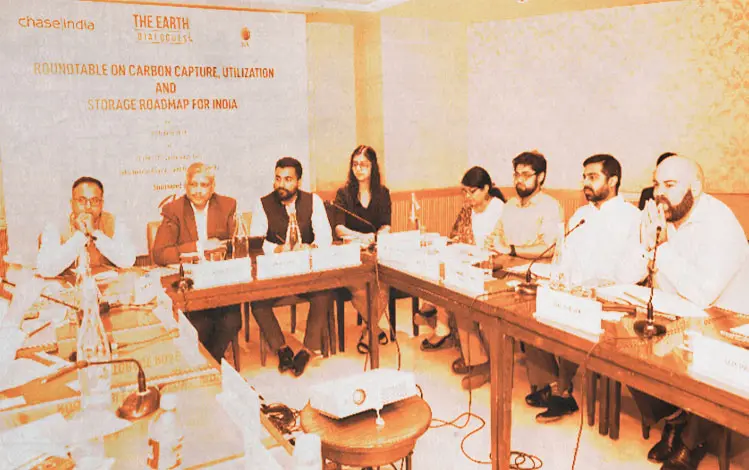
June 1, 2019
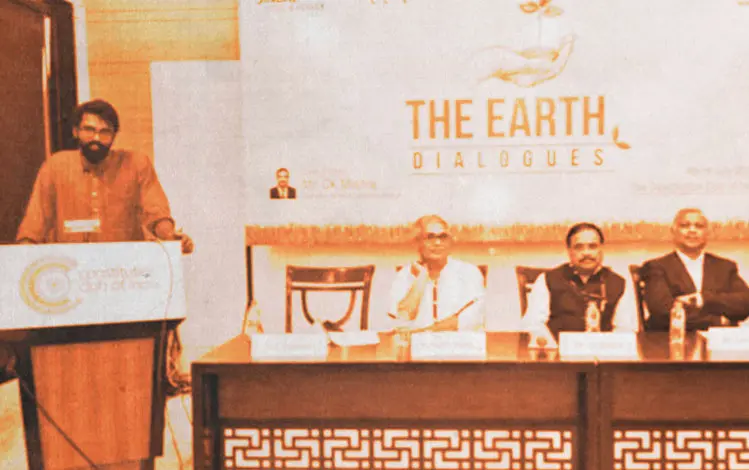
The Earth Dialogues: Roundtable on Carbon Capture, Utilization and Storage (CCUS) Roadmap for India

January 1, 2019
Sustainable Health Dialogue: Multi-dimensional Approach to Ensuring Safe Blood Transfusion
September 1, 2018
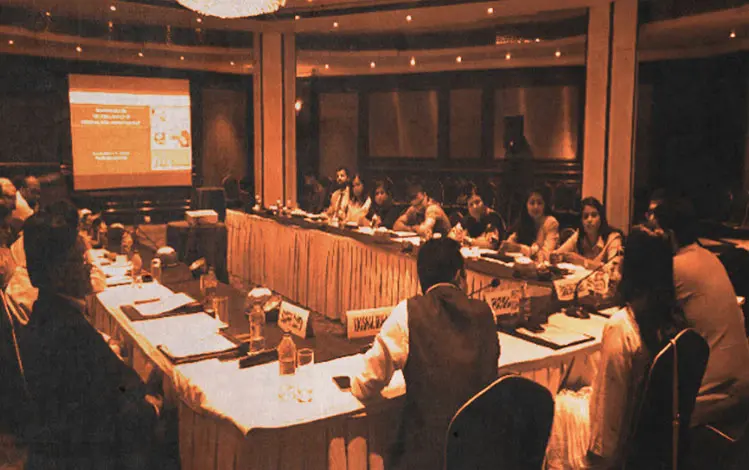
Roundtable on Sectoral Impact of Personal Data Protection Bill 2018
August 1, 2018
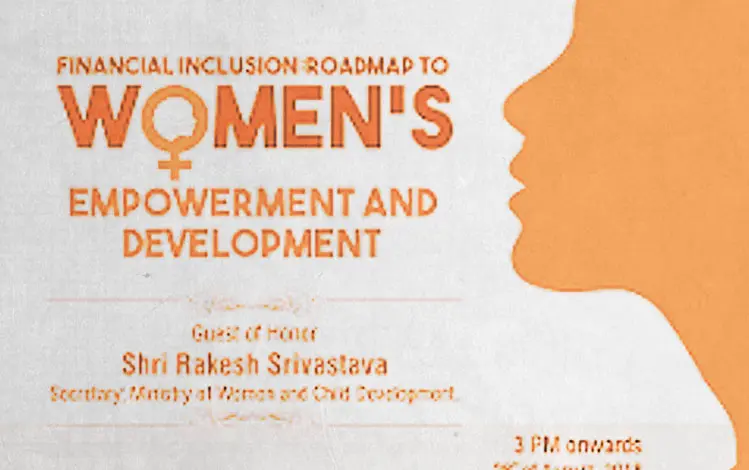
Financial Inclusion: Roadmap to Women’s Empowerment and Development

November 1, 2016
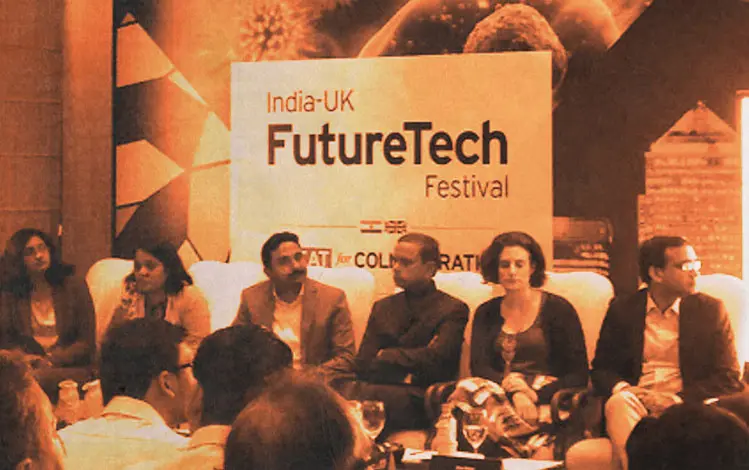
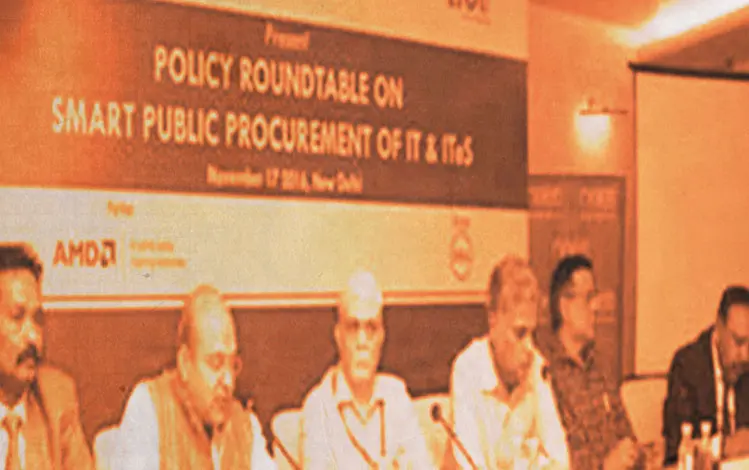
Roundtable Discussion on Smart Public Procurement of IT and ITES

August 26, 2016
Defence Attaches Conclave on Enhancing Defence Capabilities Through Cooperation
September 24, 2015
2nd Roundtable on Digital India Campaign, San Carlos, California, USA